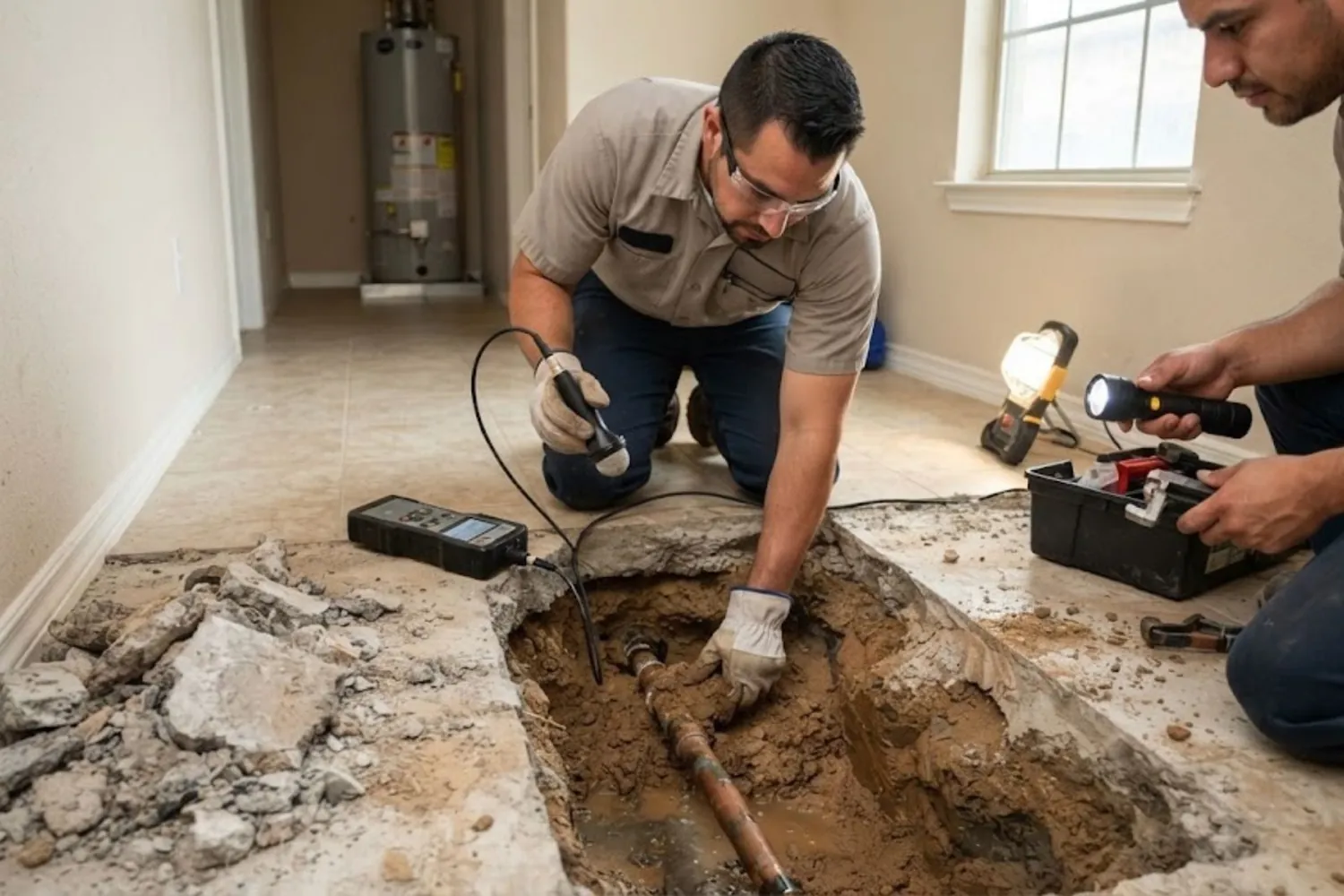
Slab Leak Repair in Moncks Corner, SC
A slab leak is a leak in a pressurized water line that runs under or through the concrete foundation. Because the pipe is buried, the signs are indirect. If you suspect one, shut off the main valve and call our 24/7 line. A plumber can be sent to your Moncks Corner address.
Check the water meter after closing the main valve at the house. If the dial still moves, the leak is outside the house or under it. A plumber can then separate the yard line from the slab lines with a pressure test.
Signs of a Slab Leak
- A warm or hot spot on a tile, wood or concrete floor.
- The sound of running water when every fixture is off.
- Damp carpet, lifting flooring or cracks in tile along a line.
- A water bill that jumps with no change in use.
- Low water pressure, or a water heater that runs nonstop.
A hot-water line leaking under the slab is the classic case, because you feel it as warmth. Cold-water slab leaks are quieter and often reveal themselves only through the meter and the bill.
Why Slab Leaks Happen Here
Berkeley County soil holds moisture, and Moncks Corner gets about 52 inches of rain a year. Pipes under a slab can corrode where they touch concrete or soil, and shifting ground rubs a line against rock or the slab itself. In some homes, copper lines under the slab pit from the outside, while plastic lines can fail at fittings.
The oldest slab homes in town are not the only ones affected. A fast-growing area also has homes where pipe was installed quickly, and a single bad fitting under a slab can leak years later. A leak test is the only reliable answer, not the age of the house.
Locating the Leak Without Breaking the Floor
| Method | What it finds |
|---|---|
| Meter test | Confirms water is leaving the system |
| Pressure test by section | Narrows which line is leaking |
| Acoustic listening | Hears the hiss through the concrete |
| Thermal imaging | Shows warm hot-water lines on the floor |
| Tracer gas | Finds small leaks in drained pipe |
The same tools are used on our leak detection visits. We mark the leak on the floor so any cutting is as small as possible.
Warm Floor? Meter Running?
Call the 24/7 line. A plumber can be sent to your Moncks Corner address, and you hear a clear price first.
Repair Options: Spot Repair, Reroute or Repipe
Spot repair through the slab
- The leak is a single point
- Pipe elsewhere is in good condition
- Floor can be opened and patched
- Lowest scope of work
Reroute or repipe
- Several leaks or corroded pipe
- The slab should not be cut
- New lines run through walls or attic
- More work, but avoids future slab leaks
A reroute abandons the slab line and runs a new one overhead through the attic or walls. For homes with repeat failures, repiping can cost more up front and save the floor from future cuts. The plumber explains each path and its cost, and you choose.
Insurance, Flooring and Drying
Some homeowner policies cover access and repair when a slab leak causes sudden damage, though wear-related leaks are often excluded. Ask your agent before work starts. Wet flooring and underlayment dry slowly in humid weather, so ask the plumber about drying before new floors go in.
Pricing: What Shapes a Slab Leak Repair
Want your real number? Call (855) 575-2890 and describe the job.
Codes and Standards Behind This Work
A reroute or repipe is built to the International Plumbing Code (IPC), and any concrete work starts with a call to 811. The EPA's WaterSense program notes that household leaks can waste nearly 10,000 gallons a year.
Slab Leak Repair Questions
Yes. Close the main valve and call the 24/7 line. A plumber can be sent to assess and stop the flow.
Warm floor spots, running-water sounds, damp flooring, a rising bill and a moving meter with everything off are the usual signs. A plumber confirms with a pressure test.
Not always. Pinpointing the leak first keeps cutting small, and a reroute can avoid the slab entirely.
Active leaks can erode soil under the slab and damage flooring, so yes. Shut off the main and call.
Coverage varies. Sudden damage may be covered while wear-related leaks are often excluded. Ask your agent.
Detection takes a few hours. A spot repair often takes a day. A reroute or repipe takes longer, and the plumber gives you a window before work begins.