What Whole House Means
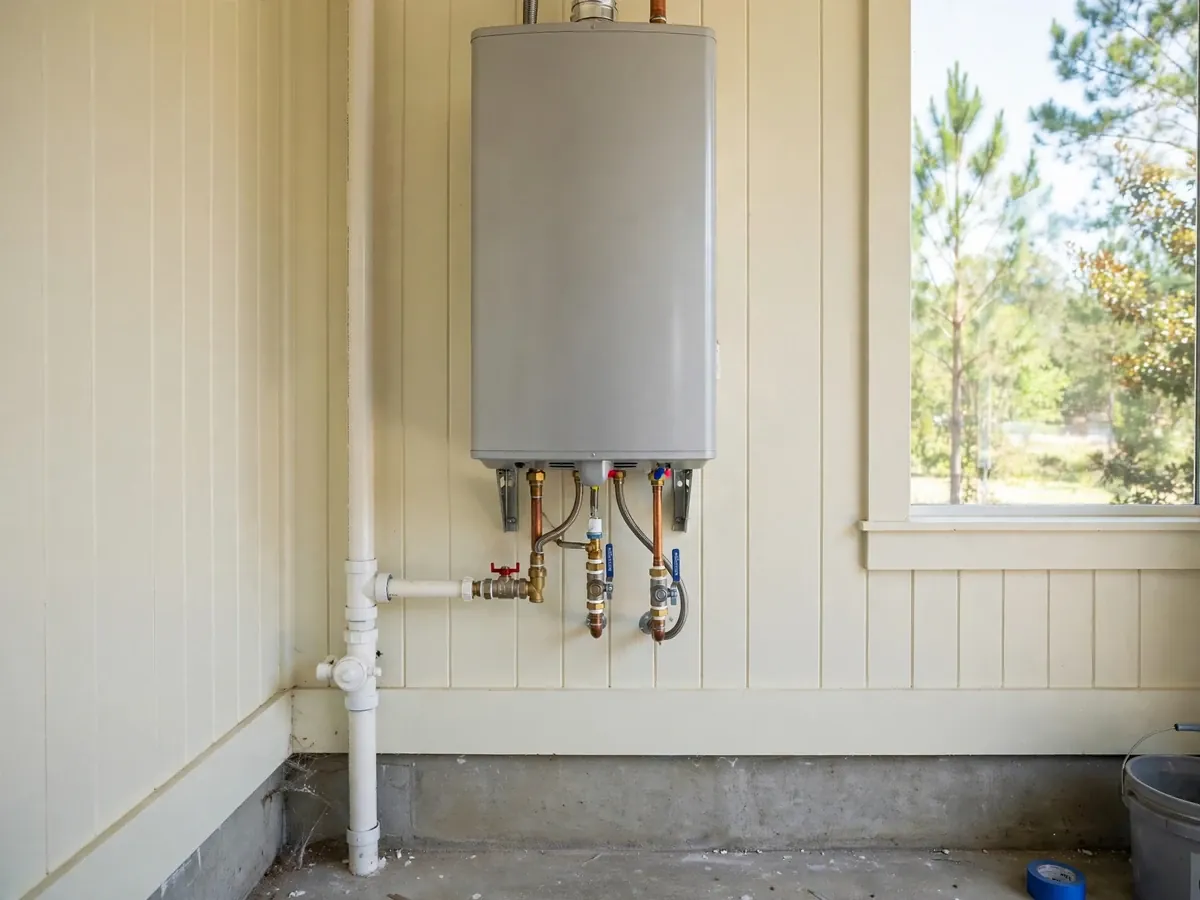
A whole-house unit serves the entire home from one heater, instead of a small point-of-use unit under one sink. It is the same technology, only larger. That means a larger burner or heating element, bigger gas or electric supply and more careful sizing.
The goal is simple. At your busiest moment, the unit must deliver enough hot water at the temperature you set. If it cannot, the temperature falls at every fixture, not just one.
Step One: Count Peak Flow
List the fixtures that could run together at the same time in your household. Use realistic combinations, not worst-case fantasies. A family of four might run two showers and a dishwasher on a school morning, while a couple might never run more than one thing at a time.
| Fixture | Gallons per minute |
|---|---|
| Shower | 2.0 |
| Kitchen faucet | 1.5 |
| Bathroom faucet | 1.0 |
| Dishwasher | 1.5 |
| Washing machine | 2.0 |
| Soaking tub fill | 4.0 to 6.0 |
Add the flows of the fixtures that overlap. Two showers, the dishwasher and a bathroom faucet total 6.5 gallons per minute. That is the number the unit must deliver.
Step Two: Work Out the Temperature Rise
Temperature rise is the target hot water temperature minus the incoming cold water temperature. If incoming water is 60 degrees and you want 120 degrees at the tap, the rise is 60 degrees. Colder incoming water means a larger rise, and a larger rise means the unit can deliver less flow.
Manufacturers publish a chart showing flow for each rise. Warmer incoming water means a smaller rise and more flow. Your plumber can measure the actual temperature at your hose bib on a cold morning.
Planning a Whole-House Unit?
Call and describe the home. A plumber can walk through sizing with you.
Gas or Electric?
Gas whole-house units
- Deliver high flow at a large rise
- Need a vent and a properly sized gas line
- Cost less to run where gas is available
- Need yearly flushing and combustion checks
Electric whole-house units
- Need no vent
- Draw heavy electrical load, often several large breakers
- May require a panel upgrade
- Suit smaller flow demands or point-of-use setups
Many homes in the area are all-electric. A whole-house electric unit may demand more power than the panel can supply. Ask an electrician to check panel capacity before you commit. If your house has gas, tankless water heater service explains the gas and venting requirements.
When Two Units Beat One
A large house with bathrooms at opposite ends can wait a long time for hot water to travel. Two smaller units, one for each wing, cut the wait. They also give you a backup if one fails. A recirculation pump or a small buffer tank is another option.
- Large homes with distant bathrooms.
- Houses with a soaking tub and several showers.
- Guest suites or garage apartments.
- Homes where a single unit's gas or electric load is too large.
Moncks Corner Notes
The town's population has grown fast, with officials expecting the 2020 Census to show about 60 percent growth since 2010. Newer houses often have large bathrooms and builder-grade tanks sized for the plan, not the family. A newer home may already have a gas stub or a large electrical panel that makes a switch easier.
Ask the Town of Moncks Corner Building Department whether a water heater change needs a permit, because rules vary. Berkeley County rules apply outside town limits.
Costs You Should Expect to Discuss
The unit price is only part of the project. Plan for the vent, gas line, electrical work, condensate drain, isolation valves, and a permit where one is required. Each of those can swing a quote. A fair estimate itemizes them, and we give a clear price before work starts.
If your tank has just failed, you do not have to decide on the spot. A temporary tank can keep the house running while you plan a whole-house tankless install. Our page on water heater replacement covers the same-day options.
Whole House Tankless in Goose Creek and Nearby
Homes in Goose Creek, Summerville and Ladson see the same sizing questions. The Goose Creek plumbing page lists the areas we serve and how to reach us at night.
Common Sizing Mistakes
- Sizing for the biggest possible demand instead of the likely demand.
- Using the wrong incoming water temperature in the calculation.
- Ignoring the pipe size feeding the unit.
- Forgetting a soaking tub or a rain shower head that uses far more water.
- Skipping the check of gas line or panel capacity.
Each of these leads to either a unit that is too small or an install that costs more than expected. A site visit catches them before the unit is bought.
Questions to Ask Before Buying
Ask for the maximum flow at your temperature rise, not the headline number on the box. Ask what the warranty requires for maintenance. Ask about the minimum flow needed to start the burner, since low-flow fixtures sometimes fail to trigger it. Ask how the unit will drain condensate and where the vent will exit.
After the Install
Ask the plumber to show you the controls, the error code list and the location of the service valves. Set the temperature at a safe level, usually near 120 degrees, to prevent scalding. Mark your calendar for the first flush and keep the manual somewhere you can find it.
Standards and Sources
Flow charts in the manufacturer's literature are the standard for sizing, and gas lines are sized under the National Fuel Gas Code (NFPA 54). Electric units must also meet the National Electrical Code (NEC).
Whole House Tankless Questions
Add up the flow of fixtures that run together, work out the temperature rise, and match both to the manufacturer's flow chart.
Often yes, but a large home with distant bathrooms may do better with two units or a recirculation setup.
Possibly not. Whole-house electric units draw heavy loads. An electrician should check panel capacity first.
Gas delivers more flow per unit and costs less to run where available, but needs venting and a gas line. Electric needs no vent but needs heavy power.
Permit rules vary. Ask the Town of Moncks Corner Building Department.
Sometimes, but it takes space and plumbing. Ask the plumber at the site visit.