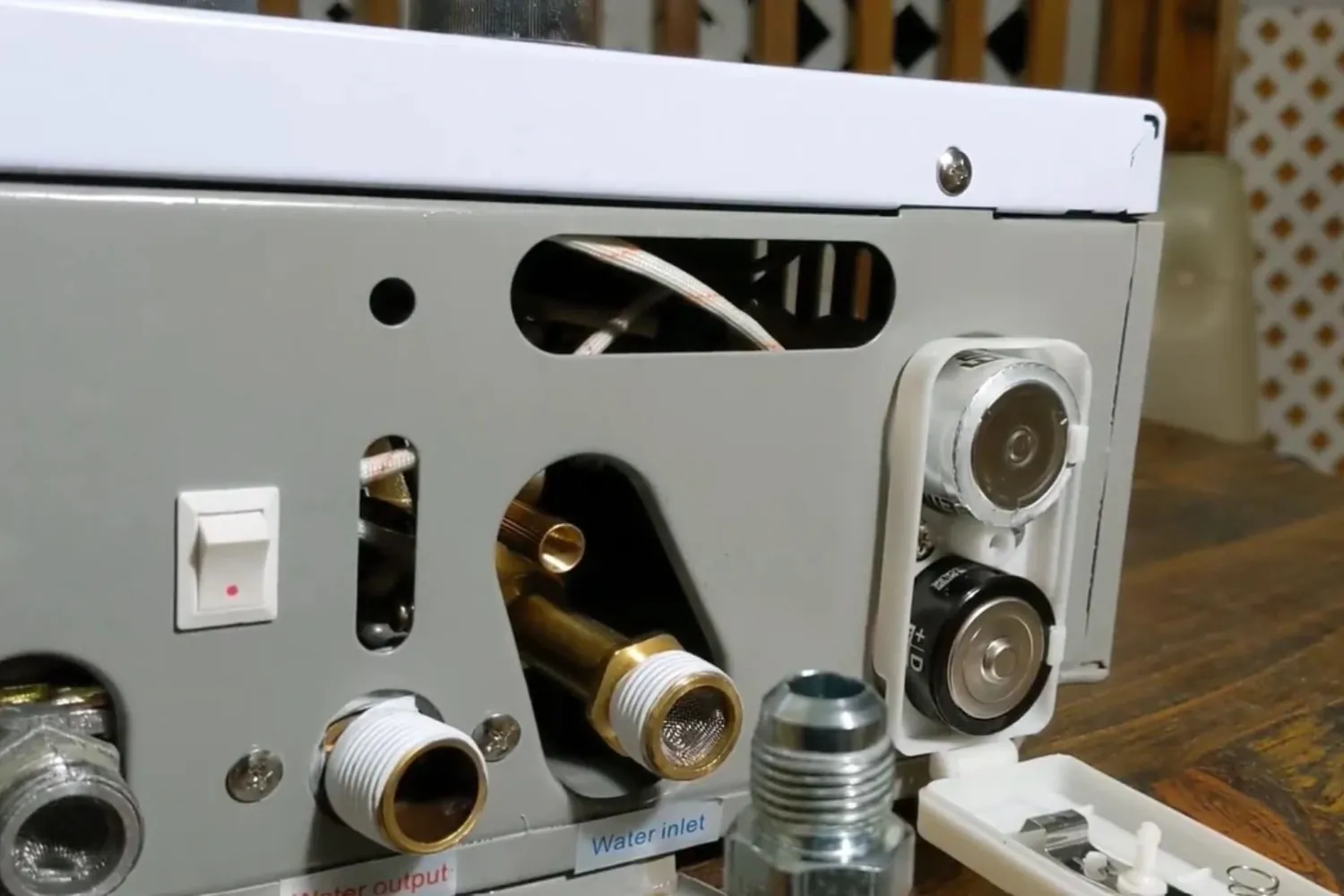
Why a Tankless Heater Needs Cleaning
Water carries dissolved minerals, mostly calcium and magnesium. When water is heated fast, some of those minerals come out of the water and stick to the hot surface as scale. A tankless heat exchanger has narrow passages, so even a thin layer cuts flow and traps heat.
The result is a unit that runs hotter than it should, shuts off on overheat codes or delivers lukewarm water. Over time, scale can damage the exchanger beyond repair. A flush dissolves the scale before that happens.
Signs It Is Time to Flush
- Hot water takes longer to arrive or fades during a shower.
- The unit shows an error code about temperature, flow or heat exchanger.
- Flow at the fixtures is weaker than it used to be.
- The unit makes a kettle-like boiling or knocking sound.
- It has been more than a year since the last flush.
Many manufacturers recommend a flush once a year. If your water is hard or you have a large household, flush more often. Your owner's manual sets the interval.
What You Need
| Item | Why |
|---|---|
| Small submersible pump | Circulates descaler through the heat exchanger |
| Two hoses with fittings | Connect the pump to the service valves |
| Five-gallon bucket | Holds the descaling solution |
| Descaling solution | Food-grade white vinegar or a manufacturer-approved descaler |
| Garden hose | Drains and rinses the unit |
| Isolation (service) valves | Let you connect hoses without cutting pipe |
Check your manual before you buy anything. Some manufacturers specify the solution and the circulating time, and the wrong product can damage seals.
The Flush, Step by Step
Turn off power and gas
Switch off the unit's power and close the gas valve so it cannot fire while the exchanger is full of cleaner.
Close the water valves
Shut the cold inlet and hot outlet service valves, then open the drain ports to release pressure.
Connect the pump
Attach one hose from the pump to the cold service valve and a return hose from the hot valve to the bucket.
Circulate the solution
Pour the descaler into the bucket and run the pump for the time your manual states, often about an hour.
Rinse and restore
Drain the solution, rinse with fresh water, clean the inlet filter screen, open the valves and restore power and gas.
Open a hot tap afterward and let it run until the water is clear. Check for leaks at the service valves.
Need the Flush Done?
Call and tell us the brand. A plumber can flush and check the unit.
When Not to Do It Yourself
A flush involves gas, water and electricity in the same small space. If your unit has no service valves, if it is a recirculating model with unusual plumbing, or if you smell gas at any point, stop and call a plumber. Cutting in new valves is quick work for a plumber, and it makes every future flush easier.
If the flush does not fix the error codes, the problem may be an ignition, flame or sensor fault instead of scale. That is a repair rather than a maintenance job, and our tankless water heater service page explains how repairs are diagnosed.
Local Water Notes
Moncks Corner gets about 52 inches of rain a year, but rainfall does not tell you how hard your tap water is. The mineral level depends on your utility's source. The Moncks Corner Public Works Commission publishes an annual water quality report, and Berkeley County Water and Sanitation serves other addresses nearby.
Read the report for your address or test your tap with a strip from a hardware store. If the water is hard, shorten the flush interval and consider a scale-prevention cartridge.
Cleaning the Inlet Filter
Every tankless unit has a small screen where cold water enters. Debris from the main or from water work in the neighborhood can collect there. Close the cold valve, unscrew the filter, rinse it in a sink and put it back. This takes five minutes and prevents low-flow codes.
How Much Does It Cost
A do-it-yourself flush costs the price of the pump, hoses and descaler, mostly one time. A plumber's visit is priced by the unit, access and whether valves must be installed. We give a clear price before work starts, and that price depends on what we find at your unit.
If your unit is old or keeps failing even after a flush, it may be time to look at water heater replacement. We will tell you honestly when a flush will help and when it will not. Customers in the Goose Creek area can reach us through the Goose Creek page as well.
Mistakes to Avoid When Flushing
- Leaving the gas on while the exchanger is full of cleaner.
- Using a descaler the manufacturer does not approve.
- Skipping the rinse, which leaves acid in the unit.
- Forgetting to reopen the service valves afterward.
- Ignoring a leak at the valves when the flush is done.
Each of these mistakes has damaged a unit somewhere. If you are not sure about a step, stop and call. A flush done carefully takes about an hour. A flush done carelessly can cost a heat exchanger.
Keeping Records
Write the date of each flush on a label near the unit. Many warranties ask for proof of maintenance, and a record also tells you when the next one is due. Note the error codes you see and when they appear. That history helps a plumber find a pattern faster.
Standards and Sources
The flush interval and approved descaling products come from the manufacturer's manual, which is the standard to follow for your unit. The U.S. Department of Energy also suggests 120 degrees as a starting temperature setting.
Tankless Cleaning Questions
Many manufacturers say once a year. Hard water or heavy use calls for more often. Follow your owner's manual.
Many manuals allow food-grade white vinegar, but some require a specific descaler. Read your manual first.
Scale narrows the passages, flow drops, the unit overheats and the heat exchanger can fail early. Warranties may also require maintenance.
A plumber can install isolation valves, and after that every flush is easier.
Only those caused by scale or low flow. Ignition or sensor faults need a repair.
Often about an hour or two, plus time to install valves if needed.