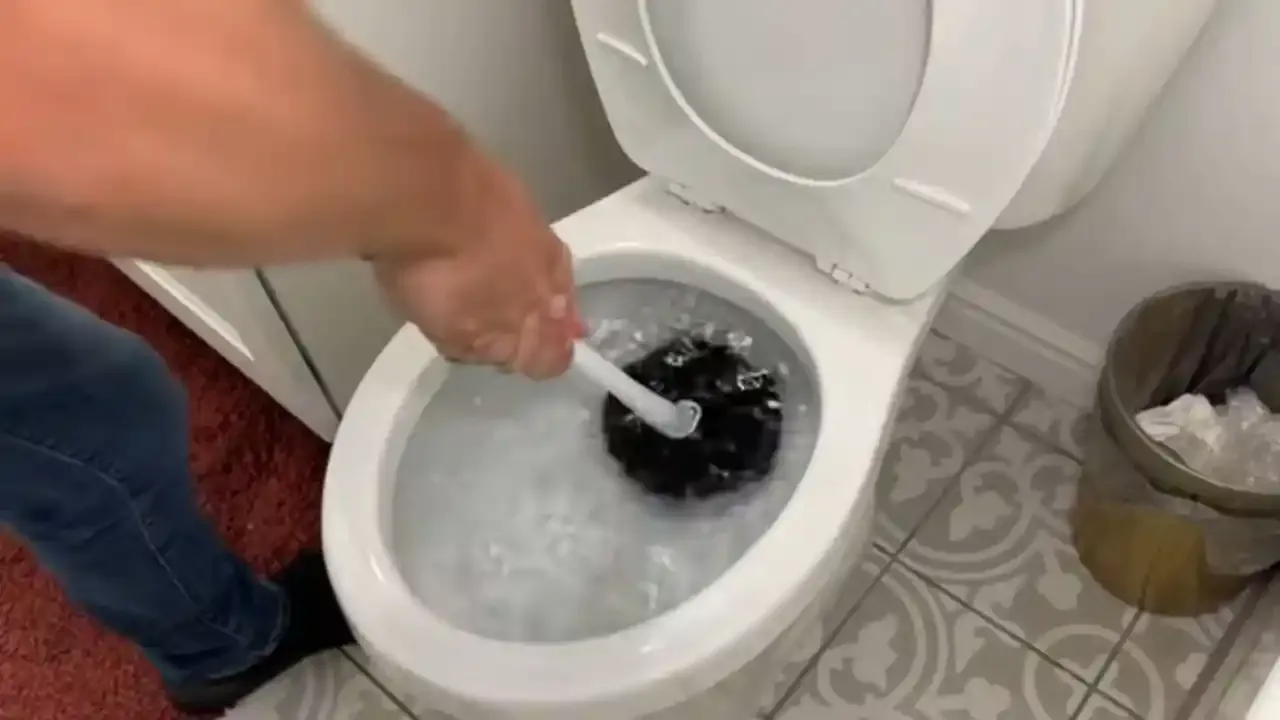
Stop the Water First
If the bowl is filling toward the rim, do not flush again. Lift the tank lid and push the flapper down, or turn off the shutoff valve behind the toilet by turning it clockwise. This stops more water entering the bowl and prevents an overflow.
Put old towels around the base. Put on rubber gloves. Make sure the bathroom floor is not slippery.
Use the Right Plunger
| Plunger | Shape | Works on |
|---|---|---|
| Flange plunger | Cup with a soft rubber flap extending from the bottom | Toilets, since the flap seals the drain opening |
| Cup plunger | Plain flat cup | Sinks, tubs, flat drains |
| Accordion plunger | Pleated plastic body | Can work, but may crack porcelain if forced |
A flange plunger is the right tool for a toilet. The flap fits into the drain opening and makes a tight seal. A flat cup plunger can work on a toilet in a pinch, but it seals poorly.
The Technique, Step by Step
Add water if needed
The bowl should have enough water to cover the plunger cup. If not, add water from a bucket.
Seat the plunger
Insert the flange into the drain opening and press the cup against the bowl to form a seal. Tilt slightly to push out air.
Push gently, pull sharply
The first push should be slow, so you do not splash. Then pull back firmly. The pull does most of the work.
Repeat for fifteen to twenty strokes
Keep the seal tight. Do not lift the plunger between strokes.
Check the bowl
If the water drains quickly, the clog is clear. Flush once to confirm.
Give it three or four rounds before you quit. A stubborn clog can need patience. If the water level drops slowly, keep going.
Plunger Not Working?
Call the 24/7 line. A plumber can be sent to your Moncks Corner address.
What Not to Do
- Do not pour chemical drain opener into a standing blockage. It sits on top and burns the next person.
- Do not keep flushing hoping it will clear.
- Do not use a metal coat hanger. It scratches porcelain.
- Do not force a plunger so hard that it cracks the bowl.
- Do not use hot water that is boiling. It can crack the porcelain.
Warm water from the tap with a squirt of dish soap sometimes helps. The soap lubricates the blockage. Let it sit for ten minutes before plunging.
When the Plunger Is Not Enough
- The water level will not drop after repeated tries.
- More than one fixture is slow or gurgling.
- Water backs up into the tub or shower when you plunge.
- A child's toy or other object went down the toilet.
- The toilet clogs again right away.
A closet auger, a short cable with a curved end made for toilets, can reach what a plunger cannot. A plumber also has a camera and cables. If the problem is the main line, see our sewer line cleaning page. For toilet repairs, the toilet repair page explains what we fix.
Moncks Corner Notes
Moncks Corner gets about 52 inches of rain a year and sits near sea level beside the Cooper River. After heavy rain, a toilet that gurgles or backs up when the tub drains may be sharing a slow main line with the rest of the house, not a local clog.
Homes outside the town sewer service use septic systems. A septic tank backing up into the house is a different problem from a toilet clog, so tell the plumber if you are on septic. Berkeley County Water and Sanitation and the Moncks Corner Public Works Commission handle public sewer questions.
How to Prevent the Next Clog
- Flush only toilet paper and human waste.
- Use less paper per flush, or flush twice.
- Keep wipes, cotton swabs and feminine products out of the toilet.
- Keep a flange plunger next to every toilet.
- Fix a weak flush before it becomes a clog.
A toilet that clogs often may have a weak flush or a partial blockage in the trap. Low-flow toilets vary a lot. A plumber can check the flush and the drain. If you live near Goose Creek and need help, the Goose Creek page lists how we cover that area.
How to Tell a Toilet Clog From a Line Clog
Flush the toilet and watch the nearest tub or shower drain. If the tub gurgles or shows a rising water level, the clog is past the toilet. Plunging will not help and may push water out of the lowest drain in the house. Stop and treat it as a line clog.
Also notice how fast the bowl drains after a small flush. A bowl that empties slowly but empties is a partial clog. A bowl that holds its level is a full clog. Partial clogs often clear with plunging. Full clogs sometimes need an auger.
Using a Closet Auger Safely
A closet auger has a short cable inside a curved tube with a protective sleeve. Seat the curved end in the drain, crank the handle and feed the cable in slowly. When you feel resistance, keep cranking to hook or break up the clog, then pull back. The sleeve protects the porcelain from scratches.
Do not use a full-size drum cable in a toilet. It scratches the bowl and can lodge in the trap. If the auger does not clear it, a plumber can remove the toilet and clear it from below.
Standards and Sources
New toilets with the EPA WaterSense label use 1.28 gallons per flush or less, and the International Plumbing Code (IPC) governs how a toilet is vented and set.
Clogged Toilet Questions
A flange plunger, because the extra flap seals the drain opening.
Fifteen to twenty strokes per round, and try three or four rounds before stopping.
It is not recommended. It can damage the bowl and sit on top of the clog.
A weak flush, too much paper or a partial blockage downstream are the usual causes.
The clog is in the main line, not the toilet. Stop and call a plumber.
If it is overflowing or several fixtures are affected, yes. Shut off the valve and call the 24/7 line.